Saturday, August 25, 2012
Cool Weather Crops - What can I grow?
Thursday, August 23, 2012
Extend your growing season and harvest through the winter
If you missed the class on late season seeding and temporary hoop houses, fear not. We've got what you need to be able to extend your growing season.
Our guest speaker, Barbara Bash has put up hoop houses for two winters now. Last winter, which was so mild, she harvested greens and other cool weather crops ALL WINTER!
The year before, which had a much colder (traditional North Eastern) winter, she was still able to harvest through New Years! Two extra months is pretty amazing, especially when you're utilizing a vegetable garden that is already prepped.
Stop by the store, we have a demo house set up and we can walk you through the (very easy!) process of setting one up yourself.
Wednesday, March 21, 2012
Early spring does not mean the end of days OR early tomato plants!
(nor does it mean early tomatoes)!
Yes the Magnolia trees are blooming in March, but this spring has only reached NEAR record-breaking temperatures.
Now, we've had a lot of questions at the shop...
"What can I put in the ground?"
"When will you have ______ in stock?"
"Do you have any tomato plants yet?"
The Answers:
Q- "What can I put in the ground?"
A- Any cold hardy perennial, shrub or tree can go in the ground as long as you can dig in the soil - so, now!
For seeds - see below.
Q- "When will you have ______ in stock?"
A- We have lots of hellebores, pieris, boxwood, and a few other evergreens in stock right now.

We are getting our first real shipment of shrubs and perennials this Thursday (3/22/12), which will include: Lupines, Bleeding hearts, Japanese Forest grass, Rozanne Geraniums, Heuchera, forsythia, quince, butterfly bushes, a couple of hydrangea varieties, and more.
We will be full in the nursery by April 1st, but remember - we bring in most flowering perennials when they are actually showing color. (For some reason you guys don't want to buy empty pots of dirt - so weird.)
We all want full and flowering perennials to put in our gardens, so we don't bring in a lot of echinachea, until closer to bloom time.
Unfortunately, we won't have a full delivery of pine mulch and coco mulch until Monday (3/26/12). I appologize to everyone who is going to be looking for it this weekend. We have deer repellent, all natural Copper fungicide for your fruit trees (yes, start spraying now), we have all natural insect repellent (yes, the mosquitoes are out!) we have plant tone, rose tone, green sand, etc.
It's still early. We keep saying it, "It's still March!" Everyone in our industry, growers, suppliers, and Victoria Gardens are used to being still under snow this time of year.
To keep you busy with spring clean up: expandable rakes, gloves, watering cans, trunk liners and knee pads are all 30% off until the end of March.

Q- "Do you have any tomato plants yet?"
A- Oy vey! Really? (No we don't have any tomato plants.) Actually we could still get a snow storm, believe it or not. The frost free date is still May 15th, so tender annuals of any kind should be in a movable container/tray to be taken inside in case of a sudden nor'easter.
We did order some herbs in pots, including basil 'pesto perfecto' which should arrive this week.
Most annuals, petunias, marigolds, ect. we anticipate will not arrive until May as usual.

Q- "What seeds can I grow now?"
A- You direct sow all the seeds you normally would: beans, peas, greens, arugula - anything that can normally be planted in March. For flower seeds, you can direct sow sweet peas and all varieties of poppies.
For warm weather veggies and annual flowers, you still need to follow the directions on the packet. Most say start seeds inside six, four or two weeks before the final frost date - which for us is April 4th, April 18th and May 2nd. You can of course start the seeds early and take your chances planting them outside before May 15th, but because of our weather patterns, we could still get a snow storm in April!
Happy Spring!
Thursday, May 19, 2011
Growing Big Yeilds In Small Spaces
Even if you only have a windowsill or a doorstep, you can enjoy the “fruitful” experience of growing your own food. Container gardening is simple and easier to maintain then a full vegetable garden. It’s a wonderful experience for kids, and it’s a baby step if you’re intimidated by a full vegetable garden.
The most important element in starting a container garden begins with your potting soil. This is so important - it cannot be stressed enough - you can’t use regular garden dirt, even beautiful, compost-rich dirt. It’s too heavy for container gardening. You want to start with what is called a soil-less mix or potting soil. We carry an Espoma product that is organic, lightweight, and drains well. Most important, potting mix is disease and weed free. If you have old potting mix in a container, replace it. You will get better results.
Almost any type of container will do, as long as it allows proper drainage. And whether you start your own vegetables from seed or whether you buy plants already started (don’t worry, we will have locally gown, organic, heirloom vegetable starts again this year), here’s a quick summary of what size containers you will need to grow your favorite fruits and vegetables.
Small 8” pots are perfect for growing a single herb, like parsley, basil, dill or cilantro, chives or small leaf lettuces, like ‘Tom Thumb’ Buttercrunch lettuce. If you have a lager container plant several varieties for a mini herb garden or a live salad bowl, right outside your kitchen door.
In 10’ to 12’ pots you can grow almost any type of greens: ‘Red Sails’ Leaf Lettuce, a buttery-tasting leaf lettuce with ruffled burgundy-tinged leaves. ‘Gourmet Baby Greens’ an heirloom mesclun mix of greens with beautiful colors, rich flavors, and diverse textures. Or grow your own baby spinach by seeding ‘Tyee’ spinach and pick the leaves, while they are still small. Grow a bumper crop of ‘Easter Egg’ radishes, and enjoy the festive color blend of red, white, rose-pink, purple, and bi-color. We also love the ‘Bush Slicer’ cucumber. You will have juicy slicing cucumbers in record time on disease resistant, dwarf bushes, perfect for small space or container gardens.
To grow larger plants like tomatoes, squash, peppers and green beans, you will need a container that can hold approximately five gallons (16” to 20” pot). For growing indeterminate (vine) tomato varieties and climbing bean varieties, a trellis or a cage is also necessary. We have found a great space saver, perfect for containers, a spiraled tomato trellis. We grew tomatoes and tomatillos on them last year, and they were perfect. If you do have a small amount of garden space to growing vegetables, using trellises to grow cucumbers, tomatoes or beans is an efficient and ornamental way to produce more per square foot. We have beautiful 6’ to 8’ tall metal trellises and bamboo, 4’ and 6’ tall expandable, tee-pee trellises that will work well in the garden or in a container.
We also highly recommend fertilizing all of your containers (except herbs, which don’t need nutrient rich soil). We like Earth Juice Grow for all greens, lettuce and spinach, and Earth Juice Bloom for everything that produces flowers and fruit. Specifically for tomatoes, some of our clients swear by Neptune Harvest Fish & Seaweed fertilizer. We haven’t done a head to head taste test between Earth Juice and the Neptune Harvest (maybe we’ll do it this year), but we have had spectacular results with all three organic products.
Here's a list of the heirloom, organic, locally-grown vegetable starts we have in packs now.
We also have a full selection of herbs (our grower follows organic practices, but has not gotten certified yet - but no chemicals, no pesticides, and he uses an organic fertilizer) including Summer Savory, French Terragon, Lemon Grass, Fernleaf Dill, Chamomile, and more!
What about my sweet tooth?
You are not restricted to growing only vegetables in your container garden. You can grow your own fruit as well. How would you like to eat fresh figs right off your own tree? Figs are not cold hardy, but can be grown in a 14” to 18” pot and can easily be moved inside for the winter.
If you need to leave your containers out all winter, we have plenty of cold hardy options. We have very cool columnar apple trees in stock. Malus ‘Northpole’ and ‘Scarlet Sentinel’ are apple varieties that grow 8’ to 10’ tall, and only 1’ to 2’ wide! So they produce fruit on a tree that resembles a tall, narrow column. For this size tree, a seven to ten gallon pot would be best (24” to 30” pot).

Another compact choice is Prunus ‘Golden Glory,’ a dwarf peach variety. Often called a patio peach, ‘Golden Glory’ grows only to 5’to 6’ tall and wide. Blueberries can also be grown in containers. We recommend using the smaller varieties like ‘Lowbush’ and ‘Earliblue’ for the best results. If you plant one of each, ‘Earliblue’ will ripen in June and ‘Lowbush’ will ripen in July. And don’t forget strawberries! Grow alpine strawberries in hanging baskets, and you’ll not only have cascading sweet, ripe fruit, but you’ll also be able to better protect them from the chipmunks, birds and squirrels too.
What do I do if I don’t live on the sunny side of the street?
Another common question we are asked is what can be grown in a container in partial shade? All vegetables grow best in full sun, but lettuce, onions, parsley, mint, and radishes can all be grown in partial shade.
Another great option for a partial-shade to full sun container plant is the Currant. Ribes ‘Red Lake’ and Ribes ‘Pink Champagne’ produce glossy clusters of beautiful, tart fruit. Often used for jams and jellies, currants have made resurgence at local farmers markets and are ripe for reinvention. See the mouth-watering recipe for Red Current Sorbet from atthefarmersmarket.com.

Good Neighbors
Container combinations
Companion plants are plants that benefit each other when planted in close proximity. Some companions attract beneficial insects, while others repel damaging pests. Onions repel slugs and aphids, and therefore is a perfect companion for cabbage, carrots, and lettuce. Other times one companion will affect the surrounding soil, for example peas and beans release nitrogen into the soil, while spinach, strawberries, and radish will use the extra nitrogen as they grow.
Companion planting naturally (without chemicals, and who wants to spray chemicals on food!) benefits productivity, and reduces the damage caused by garden pests. A perfect example of companion plants are “the three sisters”, a combination planted by native Americans of beans, corn and squash. The beans release extra nitrogen into the soil, the corn provides a vertical support, which the beans grow up, like a trellis, and the squash shades the roots of the other plants.
Click here for a full list of good companion combos!
Tuesday, May 17, 2011
Heirloom, Organic, Locally-grown Veggie Starts are in!!!


We got our first batch of Heirloom, Organic, Locally-grown Veggie Starts! Here's what we have:
3-packs and 4-packs $3
6-packs $4
Black Plum - This high yield reddish-black plum tomato is very sweet and the fruit is crack resistant. A heirloom from Russia. Excellent in sauces.
Yellow Pear - Yellow bite-sized shaped fruit. Prolific!
Red Pear - Pear-shaped cherry tomatoes.
Goldie - Great flavor and huge fruit! This golden-colored heirloom tomato has been grown and seeds have been passed down by families for 150 years.
Comonaut Volkov - This is a large meaty tomato, an heirloom variety from Ukraine, and it was taken to the International Space Station by Russian Cosmonaut Alexander Volkov, thus its name.
Pruden's Purple - Large dark fruit with rich, sweet flavor.
Brandywine- A favorite. Meaty with the perfect hint of tartness. Beefsteak fruits average 1 lb.
Rose de Berne- Beautiful pink tomato. A favorite!
Amish Paste - Medium sized fruit. Great for slicing and great for sauce.
Striped German - Beautiful 1-2 lb. fruit with red-yellow stripes and dense, juicy, red-yellow streaked flesh. Excellent sweet, complex flavors. Produces till frost.
New Girl - Small to medium fruit. Ripens early!
Moskovich - Yum! Smooth sweet taste, and this one ripens extra-early! Small to medium fruit, and the plants are prolific.
Cayenne Pepper - Long, red, and HOT!
'Doe Hill' Pepper - Small, sweet, yellow peepers. Big producer and ripen early.
'Bizeynne' Pepper - We don't have any info on this one yet. We'll call the farmer and find out!
'EJW Green' Cabbage (Early Jersey Wakefield)- Early, dark green cabbage. Fantastic raw or cooked.
'Red Express' Cabbage - From Hudson Valley Seed Library - "If your garden was a train station, and cabbages were trains, Red Express would arrive ahead of schedule. Because it is a smaller cabbage and was bred for Northern climates, it's an early producer. This red cabbage is the perfect size for home gardening. Dense but not too large, you can try planting this cabbage closer together than most. Great for a bright coleslaw or homemade sauerkraut."
'Shacko' Pak choi - Also called bok choy, you can steam it, stir fry, and toss it in soups.
'Prize Choy' Bok choi - Upright habit and vigorous! Both the leaves and the stalks are edible. Use as a replacement for celery.
Piriciacaba broccoli - About halfway between a heading broccoli and a broccoli raab, these succulent tender small green heads with very large beads make delightful raw eating. Very loose heads, lots of side shoots, sweet stalks. Even the fairly large leaves make excellent greens. Good hot and cold temperature tolerance.
'Apple Green' Eggplant - Great reviews from Local Harvest - "What a great eggplant for northern gardeners! Apple Green is round, pale green, and very delicious. The fruits are 6"x4" and mild with non-bitter flesh. Produces early and abundantly on a modest sized plant. Developed by the late Dr. Elwyn Meador at the University of New Hampshire for northern gardeners, but also does very well in warmer climates. Keeps producing until frost if kept picked."
Rainbow Chard - Another Hudson Valley Seed Library selection - "Other names for this colorful and tasty type of Swiss chard include Bright Lights and Five Color Silver Beet. Its wavy leaves and colorful stems are irresistibly pretty. It's also really easy to grow. One sowing will provide harvestable greens all season, though it's smart to do a mid-summer sowing in case disease pops up.
One of the tastiest ways to prepare chard is to heat some oil over low heat in a tall pan, toss in some sesame seeds until toasted, and then toss in a mess of washed chard until it wilts. Add soy sauce and a little sweetener: so good!"
4-packs of Lettuce
Dino Kale - More HVSL! - "Crinkly, deep green kale of exceptional eating quality.
The blue-green foliage of this kale is nearly reptilian: deeply hued, rippled, and tough. Despite its rough appearance, it is extremely sweet and tender, just like our canine companion Kale. It's also Kale's favorite brassica, as it is for gardeners worldwide, who have given it many names: Lacinato, Cavolo Nero, Tuscan Kale, Palm Tree Kale, and Dinosaur Kale. A consistent, long-season garden companion, Dino Kale will never go extinct as long as you grow it each year."
Red Russian Kale _ And one more from HVSL - "Among kales, Red Russian shines: its tender leaves are bluish-green framed by pinkish-red veins. It's as at home in a decorative border as it is in a productive row. Because its leaves are flat and thin, it wilts very quickly; if cooking with thicker, curlier kale varieties, toss it in later to keep it from overcooking."
Monday, May 9, 2011
Vegetable Companion Plants
Beans - Potato, corn, lettuce, eggplant, cucumber, strawberry, celery, carrots,
cauliflower, radish, spinach,
Beets - Sage, lettuce, spinach, carrot, cabbage, cauliflower, cucumber, marigold
Broccoli - Onions, leeks, dill, rosemary and celery
Brussels Sprout - Potato, thyme
Cabbage - Onion, oregano, sage and mint
Carrot - Bush beans, pole beans, peas, onion, leeks, lettuce and chives
Cauliflower - Oregano, onions and leeks
Celery - Tomato, leeks and beans
Corn - Lettuce, peppers, cucumber, beans and peas
Cucumber - Radish, lettuce, beans, peas and celery
Eggplant - Beans, peppers, spinach, and lettuce
Leeks - Cabbage, celery, onion and celery
Lettuce - Beets, strawberry, and radish
Onion - Lettuce, cabbage and carrots
Parsnip - Shallots, chives and lettuce
Peas - Cucumber, radish, turnips, corn, carrots and beans
Pepper Chili - Cucumber, squash and lettuce
Potato - Tomato, cucumber, sunflower, green beans, peas and broad beans
Pumpkin - Corn
Radish - Peas, lettuce and nasturtium
Spinach - Strawberries and most herbs and veggies
Strawberry - Borage, lettuce, beets and bush beans
Tomato - Asparagus, peppers, marigolds, parsley and basil
Squash - Parsley, tomato, spinach, corn and nasturtium
Sunday, April 17, 2011
Join us this morning for Coffee in the Garden with Ken Green!
Saturday, April 16, 2011
Join Ken Green from the Hudson Valley Seed Library Tomorrow at Coffee in the Garden!

Have you seeded greens? Peas? Onions? Leeks?
Why not? It's that time!
Join us for coffee in the garden this Sunday 10 am, when Ken Green will get "seedy!"
We've organized our veggie seed collection into "Start Outdoors Now," "Start Indoors Now," and "Start Outdoors Later," to help you get organized and get that veggie patch started!
Thursday, March 31, 2011
Grow Ground Cherries

What are ground cherries? Ground cherries are a delightful bite-size fruit that has a taste, which is somehow a combination of vanilla, pineapple, strawberries, grapes and tomatoes with very mild acidity. Totally weird? Yes. Delicious? Yes! The Aunt Molly variety is particularly delightful.
Ken Green from Hudson Valley Seed Company says, “Many people asked me why they are not more commonly known. Although they have great flavor and are easy to grow, they are not well suited to mechanical harvesting and grocery store shelf life. They are, however, perfect for the grazing gardener.” This is precisely why the Hudson Valley Seed Library is so important, and why partners Doug Muller and Ken Greene, the founders of the seed library, emphasize saving and maintaining heirloom seed varieties and the heritage of our agricultural past.
“Most of our varieties are rooted in the history and soils of New York or are chosen because they do well here.” Muller says, “Every year we plan on growing additional varieties on the Seed Library farm in Accord, NY and contracting with organic and certified naturally grown farmers in the Hudson Valley and upstate New York to grow even more varieties.” Aunt Molly Ground Cherries and other heirloom seeds are available from www.seedlibrary.org and at local independent garden centers, like Victoria Gardens in Rosendale, NY.
How to grow: Ground cherries (Physalis sp.) are a member of the nightshade family, related to tomatoes and tomatillos, and enjoy similar growing conditions. Start your seeds inside the last week in March and transplant at least two plants to ensure pollination in mid-spring into a full sun spot in your garden or containers. Growers recommend either staking the plant to keep the fruit laden plant off the ground or trimming the plants in half after flowering for better production. Ground Cherries thrive in the heat. Treat them as annuals, but like tomatoes, you may get some volunteer seedlings the following year.
How to harvest: The green husks hanging from your Aunt Molly ground cherries will turn tan, and then when the fruit is finally ripe they will…you got it…fall on the ground! We suggest laying two old sheets under the plants when the husks are changing colors, then every couple days, just grab the corners and collect the fruit by bucketful!
How to store: Ground cherries still wrapped in their natural brown husks can be stored in a bowl on the counter for several weeks. Once peeled, the golden yellow fruit will keep in the refrigerator for one or two weeks. You can also freeze the unwrapped fruit on trays overnight and then store them in Ziploc bags the freezer. You can also use a dehydrator and store the dried fruit in airtight containers.
How to eat: We like them sun-warmed right off the ground from the garden, but you can also use them in jam, chutneys, fruit crumbles or pies. You can also toss them whole into green salads with almonds and balsamic vinaigrette, or chop them into a spicy sweet salsa.
See recipe below:
Aunt Molly’s Sweet and Spicy Ground Cherry Salsa
1/2 pint of Aunt Molly ground cherries
2 tbsp chopped red onion
1 Jimmy Nardello red sweet pepper diced
1 tsp Matchbox spicy or or jalapeño pepper diced
1 tsp extra virgin olive oil
1/2 cup chopped pineapples or peaches
Cilantro, lime juice, salt and pepper to taste
Peel the tan husks off the ground cherries, and rinse the golden yellow fruit. Slice each ground cherry in half. Mix in a bowl with red onion, red pepper, Matchbox or jalapeño pepper, oil, and either ½ cup of chopped pineapples or peaches. Toss together. Tear or chop cilantro leaves and stir into the mixture. Finally salt and pepper to taste, and serve with tortilla chips or use as a topping for quesadillas, white fish, or chicken.
Seeds for growing Aunt Molly ground cherries, Jimmy Nardello red sweet pepper, Matchbox spicy pepper, Tam jalapeño pepper, and many more heirloom vegetables are available from the Hudson Valley Seed Library at www.seedlibrary.com or at independent garden centers, like Victoria Gardens in Rosendale, NY www.victoriagardens.biz.
Tuesday, April 27, 2010
Organic, heirloom, locally-grown vegetable starts are here!
Champion Collards
Magenta Lettuce (Grown from The Hudson Valley Seed Library seeds)
Bright Lights Rainbow Chard
Early Jersey Wakefield Cabbage
Red Russian Kale
Early Wonder Tall Top Beets
Blues Chinese Cabbage
Price Pac Choi (Bok Choy)


4 packs are $3. We will have tomatoes, melons, pepers, okra, leeks, and so much more!
Sarah from Regeneration CSA at Outback Farm delivers new veggie starts weekly as they are ready. Let us know if you are looking for something in particular.
We are thrilled to be able to work with Regeneration CSA and Sarah. If you don't have room for all the organic vegetable you want to grow yourself, you can be come a member of Regeneration CSA and pickup your share of organic veggies, herbs, and cut flowers every week!
Contact Sarah and the gang at Regeneration-- 845 687 0535 or visit their website http://www.regenerationcsa.org/ for more information about membership.
Regeneration CSA at Outback Farm
81 Clove Valley Rd
High Falls NY 12440
Regeneration CSA practices regenerative agriculture.
Here is a definition of regenerative agriculture from Farmers Without Borders:
“Regenerative agriculture is any kind of farming that enables the restorative capacity of the earth. Regenerative agriculture preserves or improves the fertility of the soil, creates an abundance of food and other agricultural products, contributes to vibrant communities and equitable economies, and respects the ecology of the natural world. Fertile soil helps create nourishing food and, in turn, healthy people and robust communities.”
Tuesday, March 30, 2010
A Word on Genetically Engineered Seeds (We don't carry them)

Sow these peas directly into your garden soil, and fear not - they haven't been genetically altered.
The film The Future of Food, which I saw at the Woodstock Film Festival in 2004, was the first time I had even heard of genetically engineered food. Only after that did I read The Botany of Desire by the now well-known Michael Pollan. The book has now been turned into a film, and since then corporate farms and the dangers of monoculture in our food sources have gained a fair amount of attention.
At the center of the debate is the leader of GE (genetic engineering) and the company best known for it's weed killer Roundup and it's Roundup resistant strains of corn, soybeans and other crops, Monsanto. Sometimes portrayed as a corrupt corporate villain and other times as a technological savior helping farmers and fighting hunger - we'll let you make up your own mind. We're just providing a little information about seed companies owned by or independent of Monsanto:
Monsanto Purchases World’s Largest Vegetable Seed Company(from an artcle dated Jan. 24, 2005)
"Monsanto Company to Acquire Seminis, Inc., a Leading Vegetable and Fruit Seed Company.
The news of Monsanto’s agreement to purchase Seminis has received little attention from the media other than the financial pages and a few seed industry and anti-globalization web sites. But then again, why should it? How many consumers – of food or seed – have even heard of Seminis? And yet, as Seminis spinmeister Gary Koppenjan said, “If you've had a salad, you've had a Seminis product."
It is estimated that Seminis controls 40 percent of the U.S. vegetable seed market and 20 percent of the world market—supplying the genetics for 55 percent of the lettuce on U.S. supermarket shelves, 75 percent of the tomatoes, and 85 percent of the peppers, with strong holdings in beans, cucumbers, squash, melons, broccoli, cabbage, spinach and peas. The company’s biggest revenue source comes from tomato and peppers seeds, followed by cucumbers and beans."
"This is not the first time Seminis and Monsanto have done business. In 1997, Monsanto began to insert its Roundup resistant gene into one of Seminis’ lettuces, with an agreement to split the premium fifty-fifty. A 1999 Wall Street Journal article also noted that Seminis had received U.S. regulatory approval for selling disease-resistant genetically engineered squash and tomatoes with longer shelf lives and that the firm was working on using biotechnology to create sweeter peas and worm-proof cucumbers."
People have many different views on what genetically engineered food means for our health and environment. But if you do have concerns, you have no way of knowing whats been done to the DNA of the squash at the grocery store. Growers are not required to mark their produce "genetically modified."
Many people choose to grow their own veggies when they can, but if Monsanto also owns the majority of seed companies, what are your options?
Here is list of seed companies still independent from Monsanto. (Note that Botanical Interest and Renee's Seeds are on the list. Those are the seed brands we carry at Victoria Gardens.)
And here is a list of seed companies owned by Monsanto. Most of these companies, like Burpee are carried by the big box stores, and some are even labeled "organic." (Just because they are owned by Monsanto does not mean they are genetically modified, but as a consumer you'll never know, because they don't have to tell you.)
Direct sow these other non-GE cool weather crops directly into your garden:


We also carry seeds from The Hudson Valley Seed Library, a collection of local heirloom seeds.
Monday, March 29, 2010
Hudson Valley Seed Library Seeds

We are lucky enough have Hudson Valley Seed Library Seeds. And when I say "we" I mean both the we of Victoria Gardens, but also the "we" of all the gardeners in the Hudson Valley and around the world trying to protect heirloom varieties and food source diversity. (Seed libraries around the world are needed to fend off crop "plagues" of fungus and other diseases - listen to this very interesting story on NPR.)

Ken Greene of The Hudson Valley Seed Library on his blog (Garden Notes for Seedy Folks) offers gardeners his advice for direct seed sowing cool crop veggies. Here is his #1 tip: "Begin in the late winter or early spring–but not until the soil is ready. Many cool-weather crops, such as spinach, peas, arugula, and hardy salad greens, benefit from being sown as early as possible. Germination may take a bit longer than under warmer conditions, but they’ll be off and running early, which means the plant has the maximum amount of time to grow before summer heat sets in. However, it’s important to wait to sow until the soil has recovered from the winter freeze-up and has returned to a friable, arable state. You’re looking for the top several inches to be dry and crumbly enough that the soil doesn’t stick as you run a tool across the surface but instead falls away in small chunks or crumbles. Clay soils can sometimes take 1-2 weeks longer than sandy soils to become planting-ready. As you continue to add organic matter to your soil over the years, it will become lighter and lighter and more easily worked at the start of the season."

Tip #2: "Do a thorough, pre-emptive weeding. Direct sown crops produce tiny seedlings that need careful attention to flourish. Among their greatest needs is to be free from crowding by weeds. This is easily accomplished in the greenhouse, where seedlings can be started in a weed-free potting soil. But when direct sowing crops, gardeners must pay careful attention to weeds during the seedling’s early days. Get a head start by doing a thorough, pre-emptive weeding before sowing. Pay special attention to stolon-rooted grasses and other perennial weeds, as it will later become nearly impossible to remove these aggressive growers without disrupting tender young seedlings. If gardening in a new or neglected patch, consider sheet mulching or tilling and raking multiple times to kill lurking weeds.

Tip #3: "Amend the soil thoroughly. It’s much easier to create a fertile bed for your plants before planting seeds than after they have emerged. An unplanted bed can quickly be thoroughly hoed and raked multiple times to incorporate a big pile of compost; trying to do such a thorough job once the seedlings are up is nearly impossible. So don’t jump the gun: add compost, lime, soybean or alfalfa meal, rock phosphate, kelp, or any complete organic fertilizer before planting. Many plants benefit from later side-dressings as well, but they won’t make up for the first-round big boost to initial fertility accomplished by thoroughly incorporating amendments."

For Ken's top 10 tips for direct sowing visit The Hudson Valley Seed Library Website.

"Our Art Packs are each designed by a different artist from the greater New York region (this includes upstate New York, the Hudson Valley, the City, Northern New Jersey, and Connecticut). Each pack celebrates the beauty inherent in heirloom gardening." -Ken Greene
Monday, October 5, 2009
Winter Rye Cover Crop for Your Vegetable Garden
We highly recommended rye, because of its superior winter hardiness and the production of relatively large amounts of persistent mulch, as a cover crop for home vegetable gardens.
We have Winter Rye in stock as well as "Fall Magic" Grass seed for an autumn lawn reseeding
.
Tuesday, June 2, 2009
New Varieties of Heirloom, Organic, Locally-Grown Veggie Starts!

Bridge to Paris-A long red sweet Italian frying pepper that cooks up as sweet as candy. Originally came from untangling a hybrid pepper called Paris. Phillies Bridge Farm in New Paltz has been continuing to grow this popular pepper, hence the name Bridge to Paris.
Jimmy Nardello-This variety of pepper was originally from Basilicata, a southern region of Italy. It takes its name from seed saver Jimmy Nardello, who brought the seeds from Italy while immigrating to Connecticut in 1887. The Jimmy Nardello's pepper is sweet and light when eaten raw. It is considered one of the very best frying peppers as its fruity raw flavor becomes perfectly creamy and soft when fried
Chervena Chushka Pepper-Bulgarian heirloom, traditionally used for roasting but also a great sweet pepper. Flesh is bright-red and very sweet, almost candy-like. Tapered fruits that are 2" at the shoulder by 6" long, ripens from green to brown to bright red
Cukes:
National Pickling-the firm black-spined dark green fruits are usually quite sweet, rarely bitter. Plants are vigorous dependable producers. This cucumber was developed with the home gardener in mind and has become the most popular home and garden type. Solid and crispy fruits are harvested for their canning quality for both sweet and dill pickles. Fruits average 6-7 inches with blocky ends and pack up perfect in canning jars. Can be harvested early for smaller pickles. Heavy yields over long period of time.
Cross Country-bears abundant blocky straight dark green white-spined fruit of uniformly good quality with very small seed cavities. Crunchy and cool. Has good yields (5.5 lb. per plant), appearance, and long uniform fruit. Has been highly rated in brine tests. Named for its widespread adaptability. . Resistant to diseases. One of the most highly rated and widely used pickling cucumbers in the country.
Early Fortune-Introduced in 1910 by the Jerome B. Rice Seed Company of Cambridge, New York, who described it as "the earliest and best white spine cucumber ever offered." Selected by George Starr at Royal Oak, Michigan from a single plant found in a crop of Davis Perfect (now extinct). Fruits are 7-8" long by 2" in diameter.
Melons:

Collective Farm Woman-his heirloom from the Ukraine was collected in 1993 by Seed Savers Exchange. Very popular on Island of Krim in the Black Sea. Melons ripen to a yellowish-gold and the white flesh has a very high sugar content, a favorite among heirloom gardeners and growers alike. Ripens early, even in Russia.
Banana Melon-Banana-shaped fruit, smooth yellow skin and sweet salmon flesh. 16”-24" long, 5-8 lbs. It was listed in 1885 by J. H. Gregory’s Catalogue, which said “When ripe it reminds one of a large, overgrown banana... It smells like one, having a remarkably powerful and delicious fragrance.” This is one of my all- time favorites, being very sweet
Missouri Gold-produces round, 20-lb melons with pale green skin and bright golden-yellow flesh that is crisp, sweet and refreshing. A really nice yellow type that is hard to find.
Golden Gopher-6 in. fruit with deep-orange flesh and superb flavor. Resistant to fusarium wilt. Developed by the Univ. of Minnesota in the 1930s.
Summer Squash:
Round light of tuscany- yeilds a round light green fruit as well as a profusion of blossoms good fro stuffing.
Early yellow crookneck-Traditional bush type, light yellow bumpy skinned fruit with creamy, white, mild sweet flesh. Harvest when fruit skin can easily be cut with a fingernail. North American, 1700. Heirloom.
Bennings Green Tint Patty Pan- Colorful light green scalloped shaped fruit, tender and good quality, excellent yields, easy to grow.
Yum! Are you hungry yet?
Cabbage:
Mammoth Red Rock-tightly packed, 8-lb heads hold their high quality during storage. Slightly flat heads are solid red to the core. Great for pickling and for slaw.
Danish Ball Head-A hardy late type ballhead cabbage with heads 7 to 8 inches in diameter. Excellent for eating fresh or cooked, great for sauerkraut or winter storage.
Broccoli:
Piriciacaba-About halfway between a heading broccoli and a broccoli raab, these succulent tender small green heads with very large beads make delightful raw eating. Very loose heads, lots of side shoots, sweet stalks. Even the fairly large leaves make excellent greens. Good hot and cold temperature tolerance.
Waltham- Developed in 1951 and long considered the standard open-pollinated fall broccoli. A reliable strain which consistently produces 6" heads with medium beads on attractive stocky 20" plants. Many hybrids make bigger central heads, but Waltham delivers a goodly number of side shoots.
Brussels Sprouts (both open polinated varieties which is harder to come by):
Gronigers-produces small button sprouts with a sweet and peppery flavor. Heavy yeilds from autumn to christmas.
Roodnerf-Roodnerf is the real deal. By late September 2007 these vigorous medium-large plants had set plump green sprouts along their stems. No wimps here, these were robust and flavorful sprouts.

This is in addition to all the veggie varieties we have!
Friday, May 15, 2009
We Have Heirloom, Organic, Locally Grown Vegetable Starts!
We are lucky enough to have a wonderful organic farm, Regeneration CSA, down the road from us in High Falls. Sarah and Kevin grow heirloom seeds organically, and we're selling these great varieties:
Tomato Varieties - All Indeterminate
Brandywine- A favorite. Meaty with the perfect hint of tartness. Beefsteak fruits average 1 lb.
Rutgers- Famous New Jersey tomato. Outstanding slicing, cooking, and canning variety. Rich red fruit 5- 8 oz.
Green Zebra- Starts out green with dark green stripes, turns yellow when ripe. 4- 5 oz.
Garden Peach- 2 oz. yellow fruits, blush pink when ripe. Relatively early and prolific. Sweet, curious and delicious.
Fargo Yellow Pear- Yellow plum shaped fruit. Prolific!
Black Cherry- Sweet yet rich and complex fruit. Abundant, vigorous, tall plants.
Be My Baby - Red cherry tomatoes.
Principe Borghese- Small fruit will turn into sun dried tomatoes right on the vine! Perfect for the lazy gardener.
Paul Robeson - This famous tomato has almost a cult following among seed collectors and tomato connoisseurs. Sweet and smokey. 7-10 oz. fruit are a black-brick color.Rose de Berne- Beautiful pink tomato. A favorite!
Mama Leone- Great tomato for canning and sauces.
Eggplant Varieties - These Varieties are well suited for areas like ours with a relatively short growing season.
Casper Eggplant- This delectable ivory-white skinned eggplant is a very early producer of 5-6 inch long fruit. Will provide you with lots of fruit.
Thai Green- Light green, long fruit. Light flavor, not bitter like the more common eggplant. Perfect in asin curries.
Ping Tung- Light Purple, long Chinese variety. Vigorous and stress tolerant. Harvest before full maturity. Sweet!
We also have beets, kale, lettuce, Swiss chard, sweet peppers and hot peppers, and we have more vegetable starts arriving weekly.
Vegetable starts are heirloom, organic and locally grown.
Mix-n-match 4-packs
for $3
3” pots $3
Monday, March 30, 2009
Planning A Vegetable Garden at the White House!
"While the organic garden will provide food for the first family’s meals and formal dinners, its most important role, Mrs. Obama said, will be to educate children about healthful, locally grown fruit and vegetables at a time when obesity and diabetes have become a national concern."

Picture by:
Stephen Crowley/The New York Times
Sam Kass, an assistant White House chef, left, and Dale Haney, the White House gardener, at the site of the new vegetable garden on the South Lawn.
For all of you who are curious, "the plots will be in raised beds fertilized with White House compost, crab meal from the Chesapeake Bay, lime and green sand. Ladybugs and praying mantises will help control harmful bugs."
We have bags of green sand ($12), lime ($4), and lady bugs and praying mantises ($8) in stock for your vegetable garden!
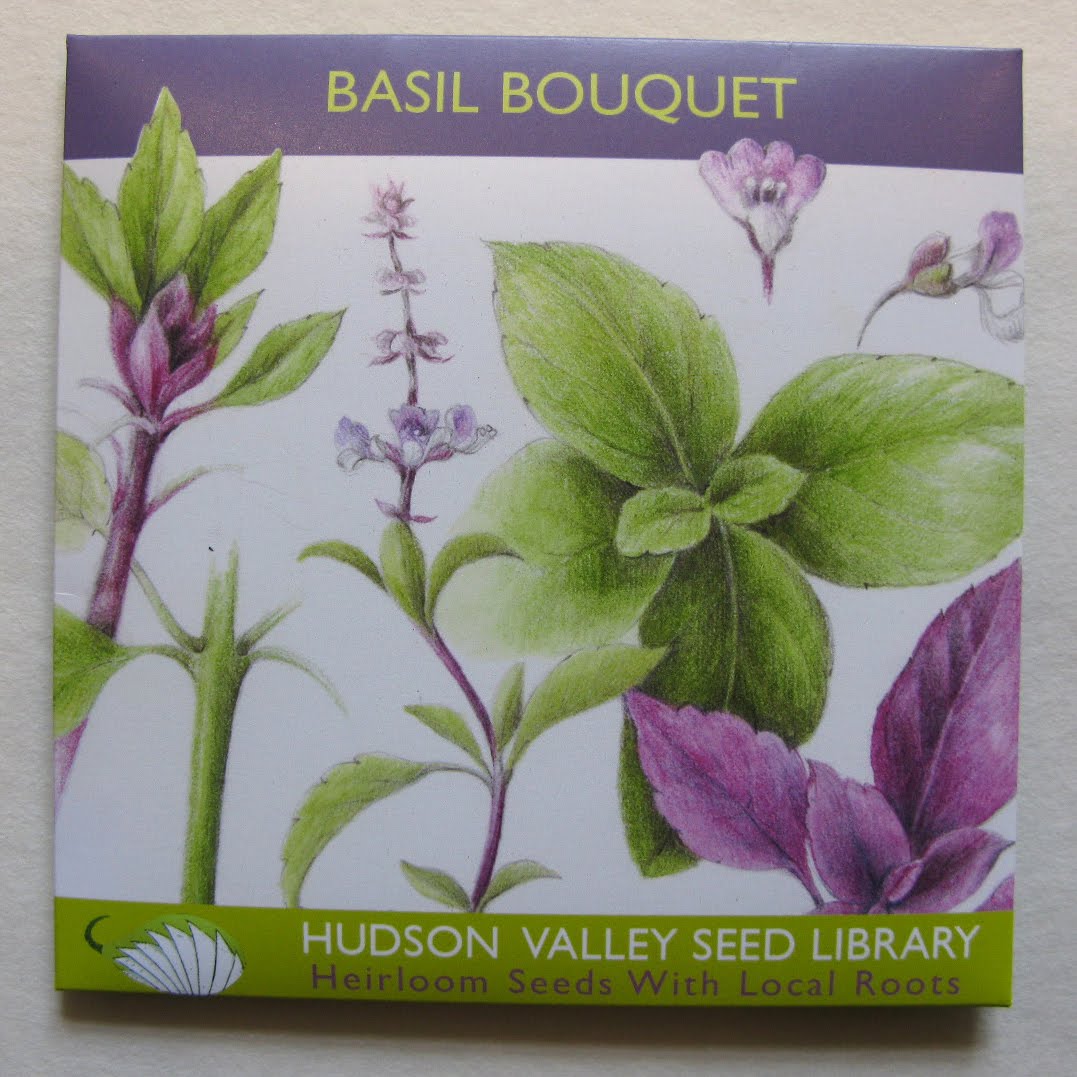
We are also proud to announce that we are carrying seeds from the Hudson Valley Seed Library.