Tuesday, June 22, 2010

What's Buggin' You? Organic Pest Control Part 2

What are aphids?

"Aphids, also known as plant lice (and in Britain as greenflies),[1] are small sap sucking insects, and members of the superfamily Aphidoidea.[2] Aphids are among the most destructive insect pests on cultivated plants in temperate regions.[3]"

- Wikipedia


And yuck!They are disgusting. When you find them, you usually don't find just one, you find a creepy crawly infestation.


You may see the holes the aphids chew threw your leaves before you see the bugs, especially if they camouflage like the type shown above.

What is the best way to fight aphids?

Fight these garden pests with their natural predators - Ladybugs!

We have live ladybugs available now!


Wait until dusk, spray the infested plant or plants with water, and then shake the live lady bugs out of the container on to the plant. If you release the ladybugs during the heat of the day, they will just fly away. By giving them water, they will stay put through the night and search and destroy aphids like ladybug special forces.

Ladybugs also eat fruit flies, thrips and other garden pests.

If you purchase and release lady bugs to eat your aphids, DON"T use chemical insecticides such as Seven, or you will kill off your beneficial insects as well. It is much more effective to introduce natural predators, than to use the chemical alternative.

For more repulsive images of different types of aphids visit this site.


What's Buggin' You? Organic Pest Control Part 1


What's Buggin' You? Organic Pest Control Part 2


What's Buggin' You? Organic Pest Control Part 3

Sunday, June 20, 2010

What's Buggin' You? Organic Pest Control Part 1


It is Japanese Beetle season and we spotted the first few at the nursery this week.
Anyone battling these invasive defoliators should use a multi-pronged attack:

1. Set up Japanese Beetle traps. Place the traps 15' to 25' away from the plants you are trying to protect (some of their favorites include roses, holly hocks, and birch trees).

We have often heard the argument that the traps lure more Japanese beetles over to your yard and do more harm than good.

And here's our argument - If the lures inside the traps are doing their jobs, than they are luring beetles to the trap. The beetles slip down the sides of the slippery bag and die. (Just place the traps 15' to 25' AWAY from the plants you wish to protect, as well as using a repellent on targeted plants.

Any Japanese beetle allowed to live (even in your neighbor's yard), will reproduce and there will be even more of these damaging bugs back next year.

2. Spray an organic repellent on the plants you wish to protect.

Cover up the sweet smell of your roses! You can get a two-for by using the Garlic-y smelling Deer Defeat product (made right here in the Hudson Valley). Spray deer defeat right on the open blooms.

3. Use Beneficial Nematodes or Milky Spore on your lawn to kill Japanese Beetle Larvae before they hatch into damaging adult Japanese beetles.


This is really the long term step that everyone should be taking. Talk to your neighbors and coordinate your applications, because these grub fighting treatments will stay in your soil diminishing the Japanese Beetle population for years to come.

Beneficial Nematodes kill soil-dwelling and boring insects such as grubs, beetles, weevils, maggots, cutworms, cucumber and squash beetles, flea larvae, fire ants, and more. Beneficial nematodes do not affect humans, animals, plants and are compatible with beneficial insects such as lady bugs, lacewings, praying mantids and earthworms.

St. Gabriel Laboratories' Milky Spore is a naturally occurring host specific bacterium (Bacillus popillae-Dutky). Milky Spore is applied to the lawn, and within the next 7-21 days will eventually die. As the grub decomposes, it releases billions of new spores.

Milky Spore is not harmful to beneficial insects, birds, bees, pets or man. The product is approved and registered with EPA, Milky Spore will not affect wells, ponds or streams.

The ideal way to combat area infestation is through organized community efforts. Large areas treated with Milky Spore can result in long term control. So talk to your neighbors and try to coordinate your efforts.

If you've taken all the procautionary steps and you still walk out to your garden to find a beloved plant covered with adult Japanese beetles...

4. Knock them off into a cup of soapy water and drown them. They are slower moving and easier to catch this way early in the morning and later in the evening. The cooler air makes them more lethargic.

5. Don't be discouraged if you lose a battle or two, keep taking organic, preventative steps to diminish the entire population and you may win the war.
What's Buggin' You? Organic Pest Control Part 1


What's Buggin' You? Organic Pest Control Part 2


What's Buggin' You? Organic Pest Control Part 3

Thursday, June 17, 2010

Spigelia: in stock for a limited time!


Hard to find, but what a great plant:

Spigelia is a late-blooming perennial that flowers in the shade and attracts humming birds.

Thursday, June 10, 2010

Burro's Tail in Bloom


This Burro's Tail on our stairs has been catching everyone's eye. They are very easy house plants here's the skinny from howstuffworks.com:

"This plant is extremely fragile and loses leaves when moved. Consequently, it should be left alone. There is a cultivar called the giant burro’s tail that doesn’t lose its leaves as readily. The fallen leaves root quickly and produce more plants.

Burro's Tail Plant Quick Facts:

Scientific Name: Sedum morganianum
Common Names: Burro’s Tail, Donkey’s Tail
Light Requirement for Burro's Tail Plant: Full Sun to Bright Light
Water Requirement for Burro's Tail Plant: Drench, Let Dry
Humidity for Burro's Tail Plant: Average Home
Temperature for Burro's Tail Plant: House to Cool
Fertilizer for Burro's Tail Plant: Balanced
Potting Mix for Burro's Tail Plant: Cactus
Propagation of Burro's Tail Plant: Leaf Cuttings, Stem Cuttings
Care Rating for Burro's Tail Plant: Very Easy"

See "very easy". A burro's Tail hanging basket costs around $24.

Wednesday, June 2, 2010

Quilt Show this Weekend - 3rd Annual Quilts in the Garden Show


Quilt Show Saturday June 5th 8:30am - 6pm and Sunday June 6th 10am to 4pm.

Victoria Gardens, located on the corner of Cottekill Road and Rt. 213 in Rosendale and Friendly Neighbors will hang their 3rd Annual Quilts in the Garden Show as a “foodraiser” for the local food pantries. The garden shop is a magical setting for this show. Weather allowing, the hundreds of quilts and vintage aprons are displayed inside and out from every level. Admission to the show is a food donation (check expiration dates, please), personal care items, pet food, or cash donation.

The donations will benefit the Marbletown and Rosendale food pantries.

There will be a raffle quilt on display with tickets for sale.

Stop by on your way to or from the Wiltwyck Quilt show. It's only minutes away!


For more information or directions contact Victoria Gardens (845-658-9007) or visit their website at www.victoriagardens.biz.


Photographs by Bonni Leu Banyard 2008

Friday, May 28, 2010

Attracting Hummingbirds to Your Garden - Part 4

Top 5 shrubs to attract hummingbirds (plus one tree):


#1. Azalea - Azaleas make up part of the genus Rhododendron. Azaleas grow best in a cool, shady spot with acidic, well-drained soil. They are easily damaged by excessive soil moisture with a few exceptions - the swamp azalea, Rhododendron viscosum, which can grow in - you guessed it - swampy conditions, has fragrant flowers, and bright red fall foliage. (Pictured above.)

#2. Butterfly Bush (Buddleia)- Beautiful flowering shrub, makes good cut flowers. Butterfly bush flowers from June-July to fall and colors vary from white, pink, lavender, purple and to near red, depending on the variety. Butterfly bush prefers a well-drained, moist, loamy type soil and tolerates heat and drought after it becomes well established. Butterfly bush can grow 5 to 10 feet high and wide, but can be trimmed to 4 to 6 feet. The more you trim, the more it blooms. Cold hardy in zones 5 through 9.


#3. Honeysuckle shrub - A species of the genus Lonicera, there are more than one hundred varieties of honeysuckle shrub, which grow from three to six feet high and wide. Most of the varieties of honeysuckle shrub have very fragrant flowers that bloom throughout the entire summer, some well into autumn.

Honeysuckle prefer full sun to partial shade, and most types of honeysuckle prefer a moderate amount of moisture in order to thrive. Pruning encourages a bushier growth.


#4. Flowering Quince Chaenomeles


#5. Weigela - Cold hardy to zone 4 Weigela can be cut and used very effectively in floral arrangements. The colorful foliage of the burgundy varieties adds long lasting color to any garden.


Plus a tree suggestion: Red Buckeye (Aesculus pavia)- If ever a tree was a femme fatale, this one definitely is. Big, amazing upright blooms later in summer. A petite tree, growing only about 18' tall, cold hardy to zone 4, and poisonous if any of the plant is digested!


Attract Hummingbirds to Your Garden - Part 1


Attract Hummingbirds to Your Gardens - Part 2


Attract Hummingbirds to Your Garden - Part 3


Attract Hummingbirds to Your Garden - Part 4

Attract Hummingbirds to Your Garden - Part 3

Continuing our series on Attracting Hummingbirds to Your Garden, here are the top ten perennials to attract hummingbirds:

#1. Salvia, sage (Salvia spp.)This is a Victoria Gardens, deer-resistant, full sun favorite.


#2. Bee balm (Monarda spp.)Another deer-resistant, full sun perennial. Plant with air flow as a priority or these can get powdery mildew.


#3. Trumpet honeysuckle (Lonicera sempervirens)These are exotic looking, but very cold-hardy.


#4. Beardstongue (Penstemon spp.)"The most distinctive feature of the genus is the prominent staminode, an infertile stamen. The staminode takes a variety of forms in the different species; while typically a long straight filament extending to the mouth of the corolla, some are longer and extremely hairy, giving the general appearance of an open mouth with a fuzzy tongue protruding and inspiring the common name beardtongue." -Wikipedia


#5. Hollyhocks (Alcea rosea)These are best grown against a fence or the house, so that the tall stalks have some support.


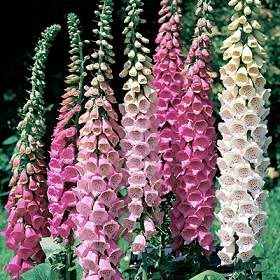
#6. Foxglove (Digitalis Purpurea) Technically a biennial. Has two-year life cycle. Grows only leaves first season from seed. Then in second season, blooms, seeds and dies with first frost.


#7. Hardy hibiscus (Hibiscus moescheutos)There is no way the hummingbirds (or your neighbors) will overlook this showy bloom.


#8. Cardinal flower (Lobelia cardinalis)Two- to four-foot tall stems are laden with brilliant crimson flowers from July through September.


#9. Columbines - (Aquilegia spp.)Especially Aquilegia canadensis 'Little Lanterns' which is a great selection of wild Columbine that grows less than 1 foot tall. (Pictured below.)


#10 Lupines- beautiful and prolific (they reseed like nobody's business.)


Attract Hummingbirds to Your Garden - Part 1


Attract Hummingbirds to Your Gardens - Part 2


Attract Hummingbirds to Your Garden - Part 3


Attract Hummingbirds to Your Garden - Part 4